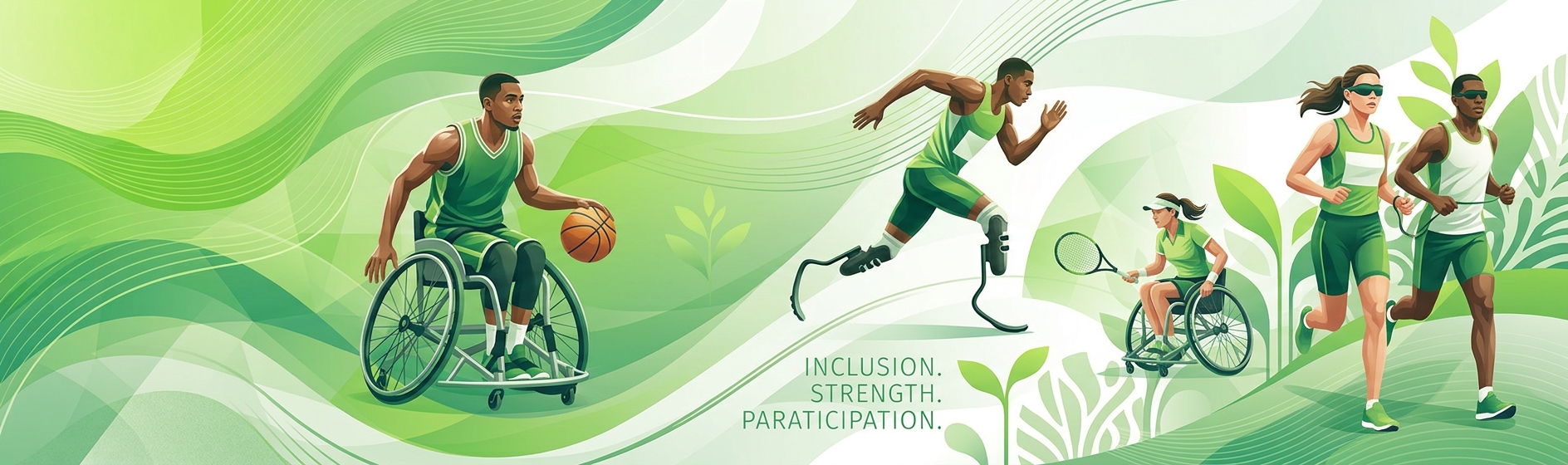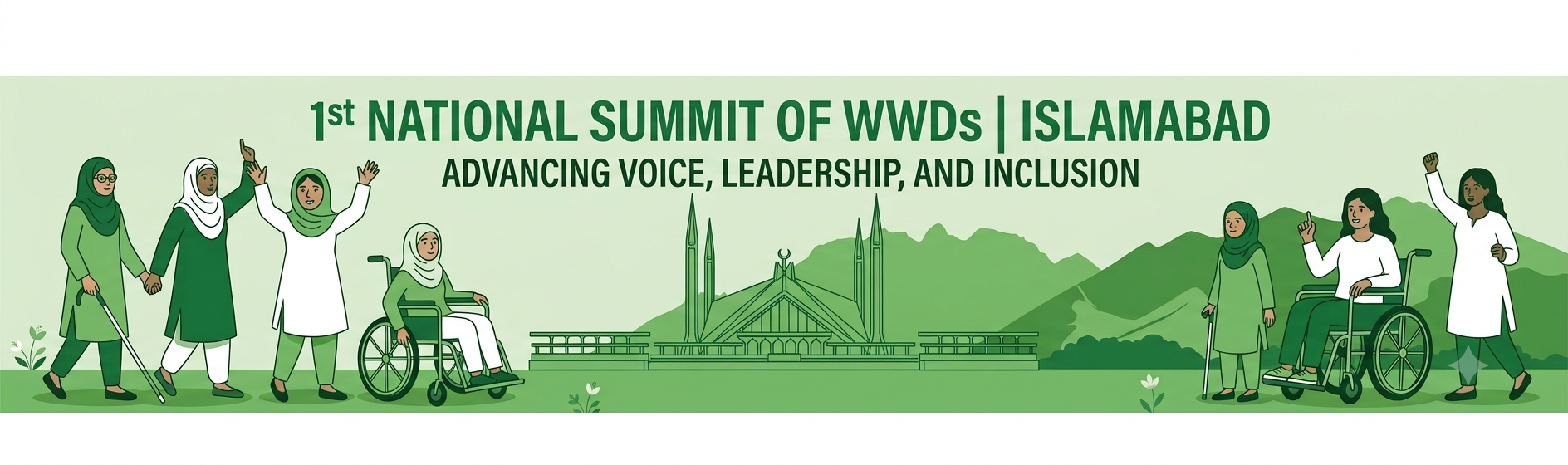
On 29–30 June 2026, Islamabad hosted Pakistan’s first-ever National Summit of Women with Disabilities (WWDs) under the theme “Advancing Voice, Leadership and Inclusion.” Convened under the Aawaz II Programme, the two-day summit brought together women with disabilities from Islamabad, Khyber Pakhtunkhwa (KP), Punjab, and Sindh to share experiences, influence policy, and strengthen a growing national movement for inclusion.
The Reality Behind the Movement
The significance of the summit becomes even clearer when viewed against the challenges faced by women with disabilities in Pakistan. The intersection of gender, disability, and poverty continues to create multiple layers of exclusion, limiting access to education, healthcare, employment, justice, and public life.
Statistics presented during the summit highlighted the scale of this challenge:
- Only an estimated 0.3% of persons with disabilities in Pakistan are registered with the National Database and Registration Authority (NADRA).
- Only 31% of persons with disabilities have ever attended school.
Without official registration, many persons with disabilities struggle to access essential public services, social protection programmes, legal rights, and employment opportunities, further deepening their marginalization.
Building Leadership from the Ground Up
The summit built upon several years of community engagement under the Aawaz II Programme, funded by the UK’s Foreign, Commonwealth and Development Office (FCDO) and implemented through a partnership involving the British Council, UNFPA, and CARE International.
In 2024, the programme established Special Interest Groups (SIGs) for women with disabilities across 15 districts in KP and Punjab. These groups have provided safe spaces where women can connect, build confidence, identify shared challenges, and collectively advocate for their rights.
Speaking at the summit, Sam Waldock, Development Director at the British High Commission in Pakistan, highlighted the importance of these community-led platforms:
“WWDs face double discrimination being women and being women with disabilities. The Aawaz II Special Interest Groups were safe spaces for WWDs to discuss their issues. Their work showed that when WWDs are provided with platforms, they not only identify their issues but also solutions.”
The programme has also contributed to tangible policy influence. According to Aawaz II, approximately 40% of recommendations generated through community engagement have been incorporated into provincial budgets, demonstrating how grassroots advocacy can inform public policy.
Voices Driving Change
The summit featured contributions from government representatives, development partners, disability rights advocates, and grassroots leaders, all reinforcing the importance of ensuring that women with disabilities are included in decisions that affect their lives.
Gulnara Kadyrkulova, Deputy Representative of UNFPA Pakistan, emphasized that:
“Social development is only possible with inclusion of vulnerable groups. UNFPA is focused on promoting the rights of women and girls with disabilities.”
Dr. Yasmin Zaidi, Team Lead of the Aawaz II Programme, acknowledged the leadership demonstrated by participants:
“You all are role models for women and girls with disabilities. You’ve brought changes not only in your own lives but also in the lives of thousands of other WWDs.”
Representatives of the National Forum of Women with Disabilities (NFWWDs) also highlighted the long-term value of grassroots organizing.
Saima Aslam, a founding member of the Forum, noted that the programme had helped develop a strong cadre of women leaders at the community level, while Zahida Hameed, Coordinator of the Forum, reaffirmed the organization’s commitment to continuing collaboration with these emerging leadership networks.
A National Charter of Demands
One of the summit’s most significant outcomes was the presentation of a National Charter of Demands, developed through consultations with women with disabilities across participating districts.
The Charter seeks to bridge the gap between community realities and national policymaking.
Speaking during the summit, Abia Akram, Chairperson of the National Forum of Women with Disabilities, highlighted persistent policy gaps:
“Persons with Disabilities experience discrimination in access to information, services and opportunities. Laws and policies relating to health, education, gender-based violence and child protection are largely silent on disability aspects.”
The Charter outlines several priority actions, including:
- Making police stations, courts, crisis centres, and shelters physically accessible for women with disabilities.
- Strengthening the capacity of first responders to address cases of gender-based violence involving women with disabilities effectively.
- Enforcing employment quotas and expanding vocational training and livelihood opportunities.
- Integrating disability-inclusive provisions into education, health, child protection, and gender-based violence policies and programmes.
Looking Ahead
The summit also featured technical discussions on sustaining grassroots leadership, promoting behavioural change, strengthening accountability, and ensuring that women with disabilities remain actively engaged in policymaking and development processes.
For the Aawaz II Programme, the summit represents an important milestone in years of community-based work. More broadly, it reflects the growing momentum of Pakistan’s disability rights movement—one that is increasingly informed and led by women with disabilities themselves.
As these leaders continue to organize, advocate, and engage with policymakers, the summit may well be remembered as the moment when local voices came together to shape a stronger national agenda for inclusion.
This version is more closely aligned with a news feature while retaining the storytelling quality of your original draft. It should also perform well for SEO by naturally incorporating key phrases such as National Summit of Women with Disabilities, Aawaz II Programme, disability inclusion in Pakistan, and women with disabilities.