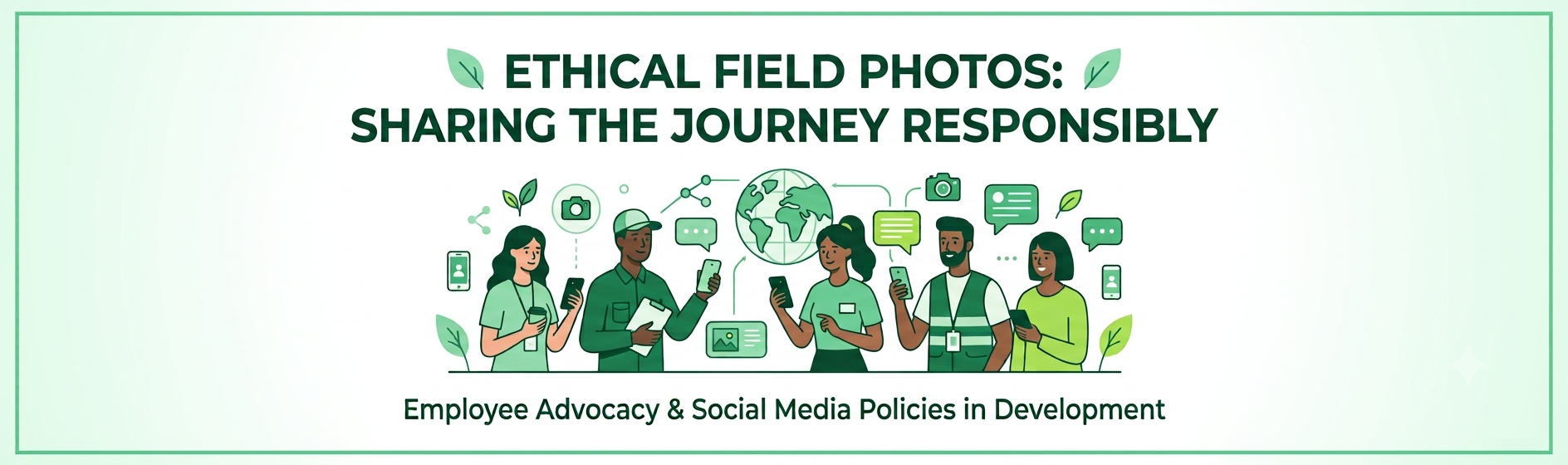
Scroll through any social feed—be it LinkedIn, Instagram, Facebook, or X—on any given weekday, and you will likely see post after post from development professionals sharing snapshots from their latest field visits, community workshops, or office events.
There is an undeniable energy in these posts. They reflect genuine pride in social impact, human connection, and the meaningful work happening on the ground. However, underneath the likes, retweets, and encouraging comments lies a critical, often overlooked question: Are these personal social media posts compliant with organizational communications policies, donor agreements, and safeguarding standards?
For non-governmental organizations (NGOs) and international development agencies, the line between personal staff advocacy and organizational policy is increasingly blurred across all digital channels.
Why Staff Share: The Power of Employee Advocacy
In the corporate world, employee advocacy across social channels is celebrated. When staff posts about their day-to-day work, it humanizes the brand, builds trust, and attracts talent. The same holds true in the non-profit sector:
- Authentic Storytelling: Audiences on Instagram or Facebook often trust a field officer’s first-hand perspective more than a polished corporate press release.
- Professional & Peer Networking: NGO workers build their personal profiles, demonstrate sector expertise, and connect with peers globally.
- Celebrating Milestones: Fieldwork is intense and deeply rewarding; sharing photos is a natural way to celebrate community achievements and program milestones.
The Risks: What Happens When Photos Go Live Without Approval?
While the intent behind sharing on personal accounts is almost always positive, posting work-related content—especially photos of field sites, local partners, or program participants—carries significant legal, ethical, and operational risks across platforms.
1. Informed Consent & Safeguarding
Photographing vulnerable populations, refugees, or children without documented, informed consent violates basic safeguarding principles. Even if verbal consent was granted for an official project photo, that does not automatically cover personal sharing on an employee’s Instagram, Facebook, or TikTok account.
2. Dignity and Ethical Representation
Unvetted images can accidentally reinforce outdated or disempowering narratives (such as “savior” tropes). Ethical communications guidelines exist precisely to ensure that community members are portrayed with agency, dignity, and respect—regardless of where the photo is posted.
3. Donor and Contractual Compliance
Many institutional donors (such as USAID, FCDO, or UN agencies) have strict visibility, branding, and confidentiality mandates. Publishing photos of project infrastructure, sensitive location data, or unreleased data can violate grant terms or compromise project security.
4. Physical Security and Real-Time Risks
Features like geotagging, Instagram Stories, and real-time updates in sensitive or volatile regions can inadvertently expose staff or community members to safety and security risks.
How Organizations Approach Personal Social Media Use
NGOs generally fall into three categories when managing staff posts on personal accounts:
| Policy Approach | How It Works | Pros | Cons |
| Strict Sign-Off | All work-related posts across any social platform must be pre-approved by Communications/Legal. | Maximum risk mitigation and donor compliance. | Stifles staff enthusiasm and creates approval bottlenecks. |
| Complete Laissez-Faire | No clear rules; staff post freely across their personal profiles. | High staff autonomy and organic engagement. | High risk of privacy, safeguarding, and reputational breaches. |
| Guided Framework (Best Practice) | Clear social media guidelines + staff training + approved media banks for personal sharing. | Balances employee advocacy with ethical oversight. | Requires ongoing training and institutional commitment. |
Practical Steps for NGOs and Development Workers
For Organizations:
- Update Policies for Personal Social Media Use: Explicitly cover all platforms (LinkedIn, Instagram, X, Facebook, TikTok) regarding what staff can and cannot post.
- Provide “Social-Ready” Assets: Supply teams with pre-approved photo banks and captions they can easily share on their personal channels.
- Train Staff on Ethical Storytelling: Move beyond legal compliance to train teams on consent, power dynamics, and dignity in visual storytelling.
- Establish a Fast-Track Review Process: Create a quick Slack or messaging clearance protocol for staff wanting to share personal field photos.
For Development Professionals:
- Ask Before You Post: When in doubt, check with your Communications or Project Lead before uploading field photos to any personal account.
- Verify Consent: Ensure anyone featured in your photos explicitly consented to public sharing on social media.
- Add a Personal Disclaimer: Include a line in your bios: “Views and posts are my own and do not represent [Organization Name].”
- Protect Sensitive Details: Turn off location tagging in real time, and avoid sharing sensitive beneficiary details or unreleased project data.
Representation in the development sector isn’t just about sharing good news—it’s a commitment to protecting the dignity of the people we serve and the integrity of the work we do across every platform.