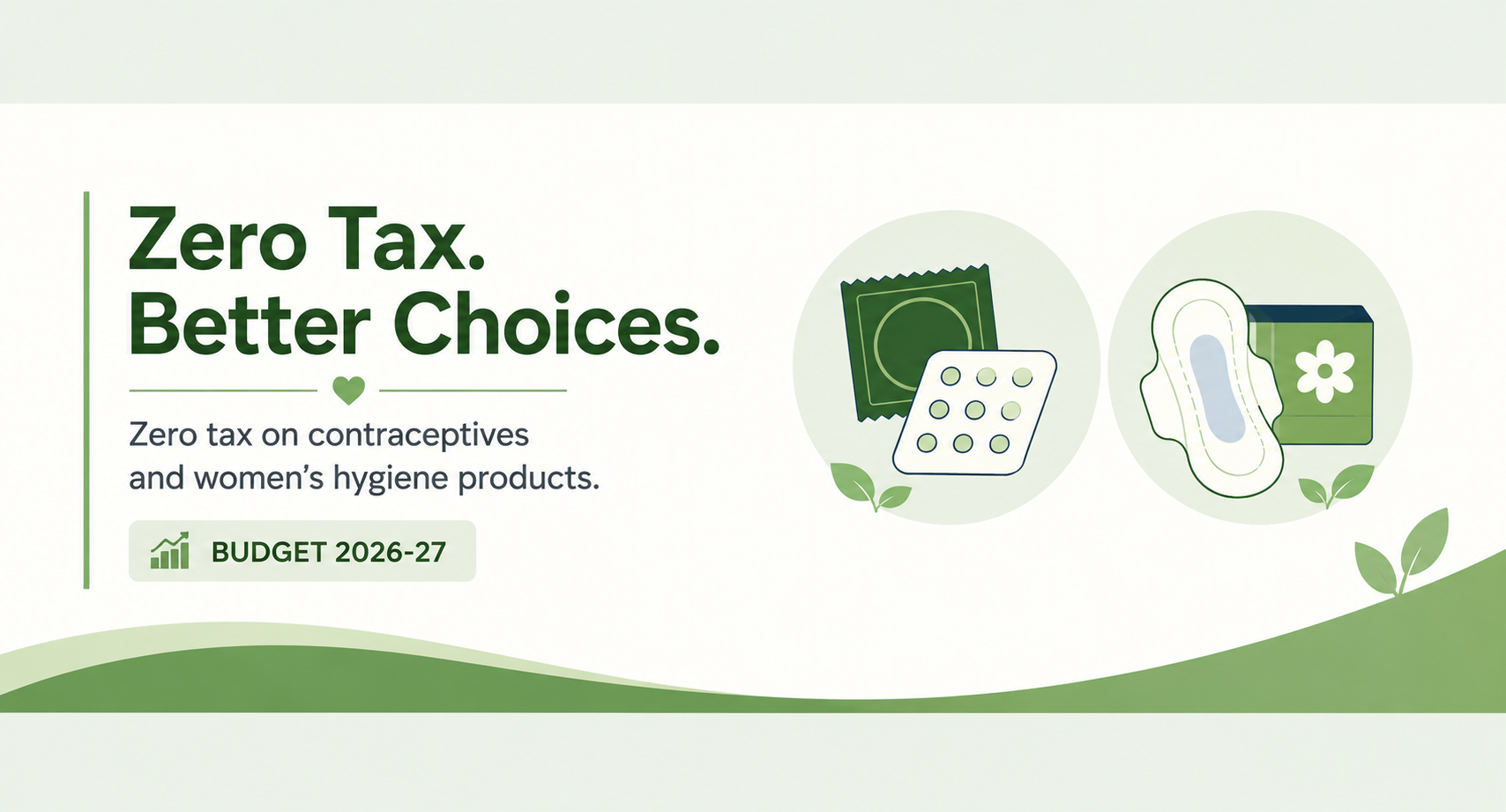
Pakistan’s Federal Budget 2026-27 contains a measure that may not have attracted as much attention as tax relief for salaried workers or increased social protection spending, but its impact on public health and development could be significant.
The government has proposed abolishing the General Sales Tax (GST) on contraceptives and menstrual hygiene products, including condoms and sanitary pads. Previously, these products were subject to an 18 percent GST, which increased their cost for consumers.
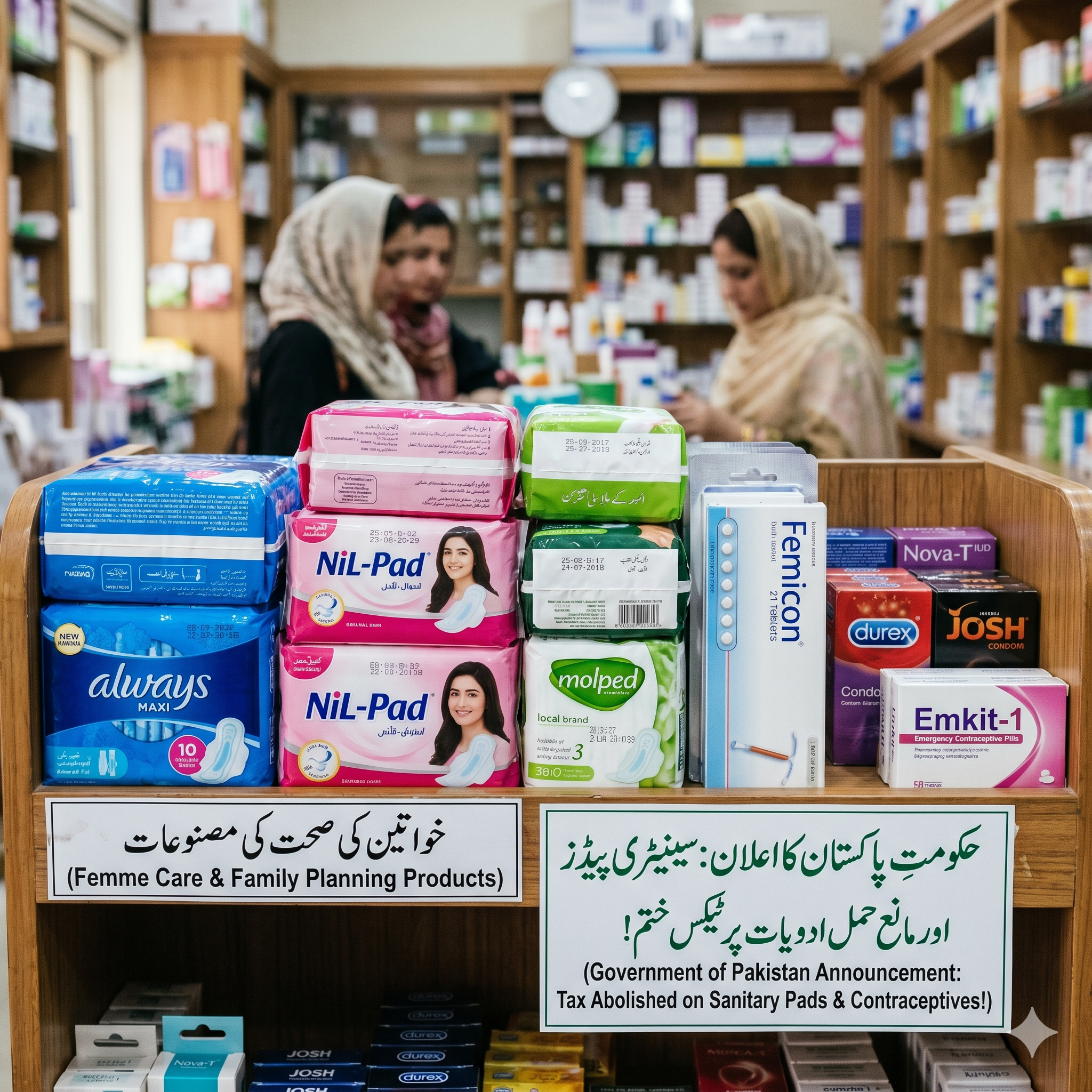
At first glance, the measure may appear modest. However, for millions of Pakistani women and families, reducing the cost of essential reproductive health products could improve access to family planning services, support women’s health, and contribute to broader development goals.
Why Affordability Matters
Pakistan continues to face major challenges in reproductive health and population management. According to the 2023 Population Census, the country’s population has surpassed 241 million, making Pakistan the fifth most populous country in the world. The population growth rate remains among the highest in South Asia, placing increasing pressure on healthcare, education, employment, and social services.
At the same time, access to family planning services remains uneven. According to the United Nations Population Fund (UNFPA), Pakistan’s contraceptive prevalence rate stands at approximately 34 percent, while nearly 18 percent of married women have an unmet need for family planning. In practical terms, this means millions of women who wish to delay or avoid pregnancy are unable to access or use contraceptive methods.
While affordability is only one of several barriers to family planning, it remains an important factor, particularly for low-income households. By removing taxes on contraceptives, the government is helping reduce the financial burden associated with reproductive healthcare and making family planning products more accessible.
Family Planning Is a Development Issue
Family planning is often viewed primarily as a health intervention, but its benefits extend far beyond the health sector.
Access to affordable and voluntary family planning contributes to lower maternal and infant mortality, improved child health, and better nutrition outcomes. It also enables women to make informed decisions about the timing and spacing of pregnancies, allowing them greater opportunities to pursue education and participate in the workforce.
The economic benefits are equally important. Smaller and better-planned families are often able to invest more in the health and education of their children. At a national level, slower population growth can reduce pressure on public services and create conditions that support sustainable economic development.
For Pakistan, where rapid population growth continues to strain resources and infrastructure, improving access to family planning is not simply a health objective—it is a development imperative.
The removal of GST on contraceptives will not solve Pakistan’s population challenges on its own. However, it represents a practical step toward reducing barriers to access and supporting informed reproductive choices.
A Positive Step for Women’s Health
The budget measure is equally significant from the perspective of women’s health.
Menstrual hygiene products are essential healthcare items used by millions of women and girls every month. Yet for many families, particularly those facing economic hardship, sanitary pads remain an additional expense that competes with other household needs.
This challenge is often described as “period poverty”—the inability to consistently access safe and affordable menstrual hygiene products.
When sanitary products become unaffordable, women and girls may resort to lower-quality alternatives that can increase health risks and discomfort. In some cases, girls miss school during menstruation because they lack access to appropriate menstrual hygiene materials.
Reducing the cost of sanitary pads can therefore have benefits that extend beyond health alone. Greater affordability can improve menstrual hygiene practices, support girls’ education, enhance dignity and mobility, and contribute to broader efforts aimed at gender equality and women’s empowerment.
The government’s decision also comes after sustained advocacy by civil society organizations and campaigners who highlighted the burden of taxes on menstrual hygiene products. Among them was lawyer and activist Mahnoor Omer, whose campaign helped bring greater public attention to the issue of period poverty in Pakistan.
More Than a Tax Cut
While the removal of GST is a welcome development, its success will ultimately depend on implementation.
Tax reductions do not automatically translate into equivalent reductions in retail prices. Manufacturers, distributors, and retailers all influence the final cost paid by consumers. The true impact of the policy will therefore depend on whether the savings are passed on to households.
Furthermore, affordability is only one component of a comprehensive reproductive health strategy. Access to family planning services also depends on awareness, availability of products, quality healthcare services, and supportive social norms. Similarly, improving menstrual health outcomes requires education, awareness, and access to adequate sanitation facilities.
The tax exemption should therefore be viewed as part of a broader effort to improve reproductive health and women’s wellbeing rather than a standalone solution.
Looking Ahead
Despite the fiscal constraints facing Pakistan, the decision to remove taxes on contraceptives and menstrual hygiene products stands out as one of the most socially progressive measures in the 2026-27 budget.
By lowering the cost of essential reproductive health products, the government has taken a step that can improve access to family planning, strengthen women’s health, and support broader human development objectives.
The measure may not carry the financial scale of major infrastructure projects or social protection programmes, but its impact could be felt in households across the country. For development practitioners, health advocates, and women’s rights organizations, it represents a reminder that sometimes the most meaningful policy changes are not the largest ones, but those that make essential services and products more accessible to the people who need them most.
Sources and Further Reading
- UNFPA Pakistan – Family Planning: https://pakistan.unfpa.org/en/topics/family-planning-31
- Pakistan Bureau of Statistics – 2023 Population Census: https://www.pbs.gov.pk
- Federal Budget 2026-27 documents: https://www.finance.gov.pk
- Dawn Budget Coverage: https://www.dawn.com
- Mahwari Justice campaign information: https://www.mahwarijustice.com