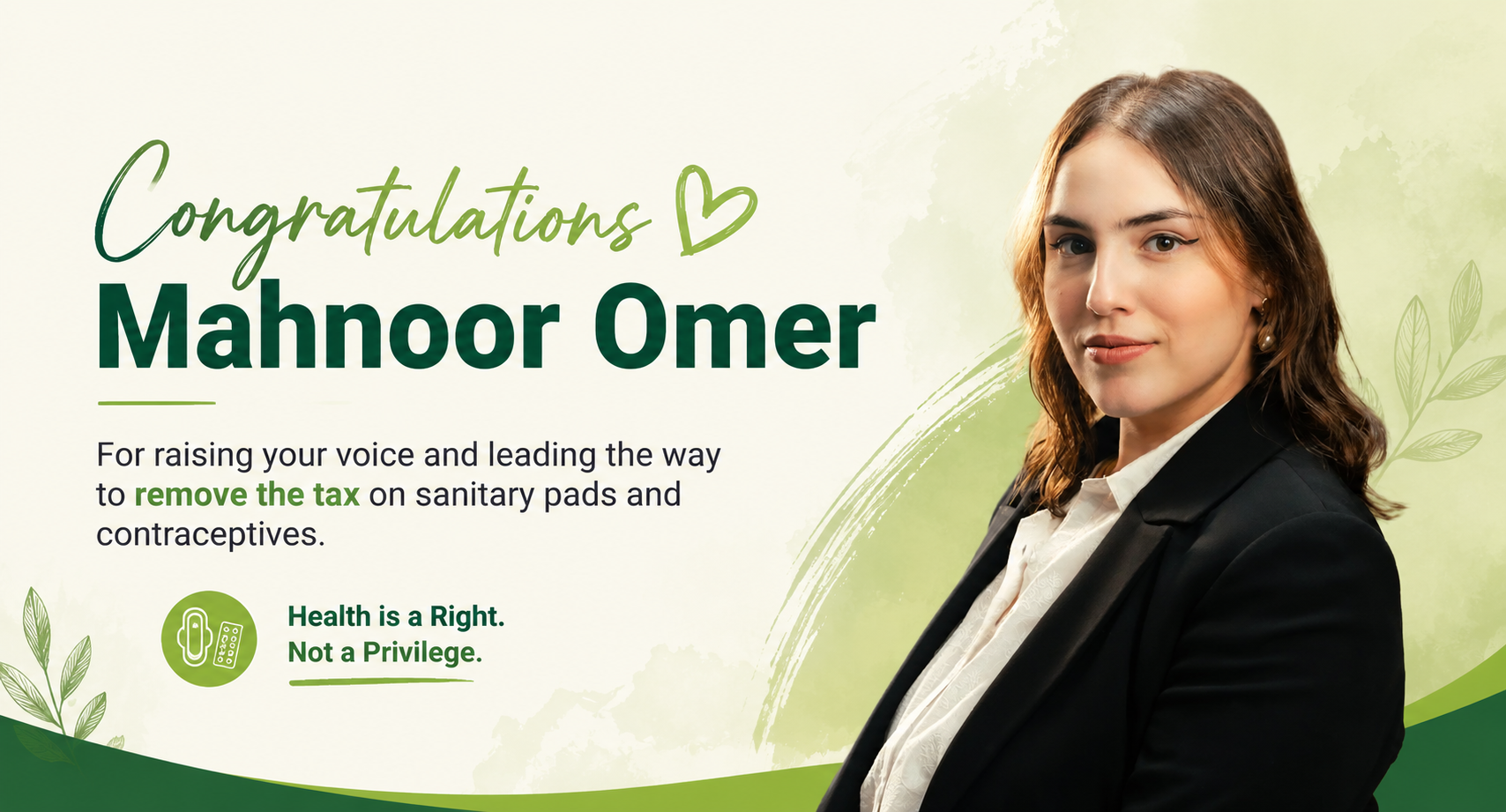

The federal government’s decision to exempt sanitary pads and contraceptives from sales tax marks an important victory for women’s health, reproductive rights, and gender equality in Pakistan. While many advocates and organizations have highlighted this issue over the years, special recognition is due to Advocate Mahnoor Omer, whose legal challenge helped bring the debate into the national spotlight.
In 2025, Mahnoor Omer filed a petition before the Lahore High Court challenging the taxation of sanitary pads and other menstrual hygiene products. Her argument was straightforward: these products are not luxury items but essential health necessities used exclusively by women. Taxing them placed an unfair burden on women and girls while making basic hygiene products less affordable for millions.
Although the case did not immediately result in a landmark court judgment, it succeeded in something equally important. It transformed a largely overlooked issue into a national conversation. Policymakers, media outlets, civil society organizations, and the public began discussing the impact of taxes on menstrual hygiene products and contraceptives, particularly on low-income households.
Why the Tax Exemption Matters
Menstruation is a natural biological process, yet access to safe menstrual hygiene products remains a challenge for many women and girls in Pakistan. When sanitary pads become too expensive, some are forced to rely on less safe alternatives, which can increase health risks and affect their dignity and well-being.
The consequences go beyond health. Limited access to menstrual hygiene products can contribute to school absenteeism among girls and create barriers to women’s participation in education, employment, and public life. By removing taxes on these products, the government has acknowledged an important reality: menstrual hygiene products are necessities, not luxuries.
This decision also sends a positive message about the importance of women’s health in public policy. For years, advocates have argued that taxation systems should take into account the different ways fiscal policies affect men and women. The exemption is a small but meaningful step in that direction.
A Lesson in Effective Advocacy
This achievement also highlights the power of advocacy and citizen engagement. Mahnoor Omer’s campaign demonstrates how individuals can influence public policy by identifying an issue, building public awareness, and using legal and democratic channels to push for reform.
The development sector often emphasizes evidence-based advocacy, and this case offers a practical example of how sustained public engagement can contribute to policy change. By raising awareness of the financial burden created by these taxes, advocates helped move the issue from the courtroom into mainstream public debate.
The Journey Continues
While the tax exemption deserves celebration, more work remains. Policymakers should ensure that the tax relief translates into lower prices for consumers and improved access for women and families. Continued efforts are also needed to promote menstrual health education, strengthen reproductive health services, and address the stigma that still surrounds menstruation and family planning in many communities.
Nevertheless, this is a moment worth celebrating. The exemption of sanitary pads and contraceptives from sales tax represents a meaningful step toward a fairer and healthier Pakistan.
Advocate Mahnoor Omer deserves congratulations for helping bring this issue to national attention. Her campaign serves as a reminder that informed advocacy can lead to meaningful change and that public policy works best when it reflects the everyday realities of the people it serves.