…..
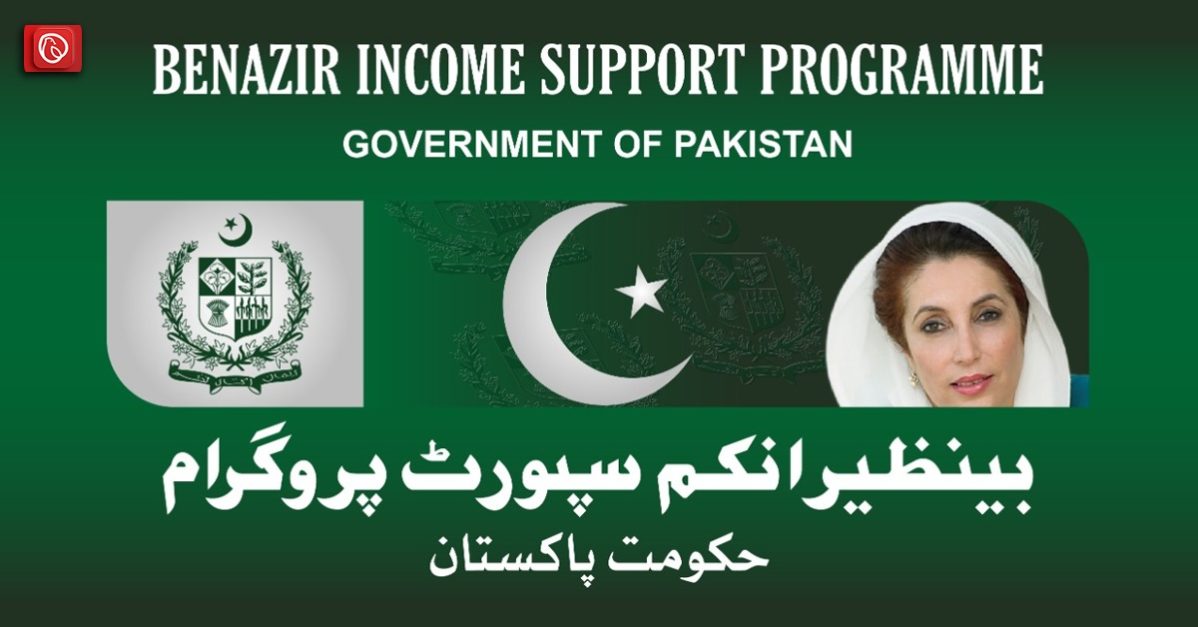
The Benazir Income Support Program (BISP) is one of Pakistan’s largest social protection initiatives. Yet it continues to attract criticism from various quarters. Some critics argue that cash assistance programs encourage dependency rather than self-reliance, while others question whether the same resources could be better invested in industries, businesses, and job creation initiatives. A recurring theme in such criticism is the perception that welfare programs have turned large numbers of Pakistani women into passive recipients of state assistance.
These are important questions. However, before addressing them, it is necessary to examine a few basic realities.
First, Pakistan has a female population of approximately 120 million. The women benefiting from BISP represent only a small fraction (one million) of that number. It is therefore inaccurate to suggest that Pakistani women, as a whole, are dependent on welfare. The reality is that millions of Pakistani women work every day in agriculture, factories, offices, schools, hospitals, home-based enterprises, and countless other sectors. Their labor plays a vital role in supporting both their families and the national economy.
A second question often raised is whether governments should focus on creating jobs and industries instead of providing direct financial assistance.
At first glance, this appears to be a compelling argument. Economic development is undoubtedly the most sustainable path out of poverty. However, the realities on the ground are far more complex. Establishing industries, attracting investment, creating jobs, providing vocational training, and supporting entrepreneurship are long-term processes. In the meantime, what should be done for those who are already living in extreme poverty and struggling to meet their most basic needs?
Moreover, the assumption that state-led economic interventions automatically produce successful outcomes is not always borne out by experience. Pakistan’s history is filled with examples of public-sector enterprises that have struggled to remain viable. Pakistan Steel Mills has remained effectively closed since 2015, while several state-owned enterprises continue to require substantial government support. Every year, the government allocates hundreds of billions of rupees in subsidies, bailouts, and financial assistance to various public-sector institutions, including Pakistan Railways and electricity distribution companies. Such support is generally viewed as an economic necessity rather than charity. This raises an important question: if the state can justify spending vast sums to sustain struggling institutions, why is comparatively modest support for the poorest households often subjected to far greater scrutiny?
This is where it becomes important to distinguish between welfare and development.
Welfare programs are designed to address immediate human needs. Feeding the hungry, providing healthcare to the sick, sheltering the homeless, or offering financial assistance to families in severe poverty are all examples of welfare interventions. Their primary purpose is to reduce human suffering in the short term.
Development programs, on the other hand, aim to help people become self-sufficient over time. Education, vocational training, microfinance, business support, and employment generation fall into this category. Their purpose is to equip individuals with the tools needed to sustain themselves independently.
Public discussions often frame welfare and development as competing alternatives. In reality, societies require both.
A person who is elderly, seriously ill, or living with a severe disability cannot simply be trained into economic self-sufficiency. Such individuals will continue to need social support. Likewise, those who can eventually become self-reliant often require assistance during the transition. A hungry person must survive before they can learn a skill, complete an education, or start a business.
It is within this context that BISP should be understood.
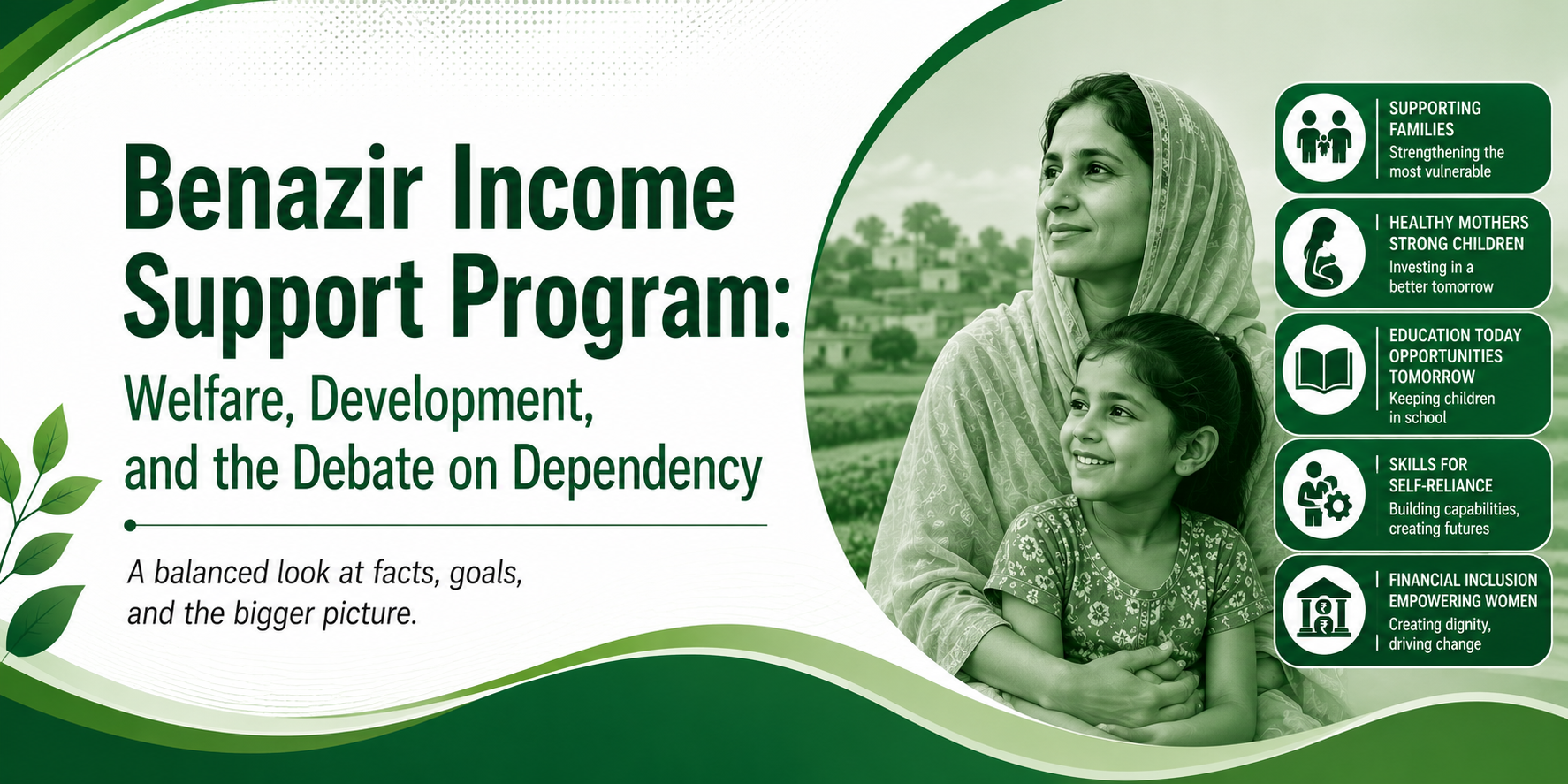
The program is often portrayed as a simple cash transfer scheme. In reality, it includes components that focus on health, education, and human development.
For example, the Nashonuma Program links support to maternal and child health. It encourages pregnant women to access healthcare services and promotes better nutrition and growth outcomes for young children. Similarly, the Education Stipends Program encourages school enrollment and regular attendance. A child who receives an education has a significantly greater chance of escaping poverty later in life.
Skill development initiatives associated with the program also seek to improve the employability of young people, enabling them to earn a livelihood and reduce their reliance on social assistance in the future.
While it is entirely reasonable to scrutinize the effectiveness of these interventions and debate how they can be improved, it is inaccurate to characterize the entire system as nothing more than a mechanism for distributing cash.
Another important aspect of the program relates to women’s identity and financial inclusion. In many parts of Pakistan, women historically lacked national identity documents and remained largely invisible within formal state systems. Social protection programs have played an important role in encouraging women to obtain identity cards, open bank accounts, and engage with formal financial institutions. Although these changes may appear modest, their long-term social significance should not be underestimated.
There is also a broader question that deserves attention. Welfare programs directed at the poorest segments of society often face intense scrutiny, while subsidies, tax exemptions, and other forms of state support that benefit wealthier groups frequently attract far less public debate. If we are serious about discussing the use of public resources, then all forms of state assistance should be examined with equal rigor.
Of course, BISP is not a perfect program. Like any large public initiative, it faces administrative challenges, transparency concerns, and implementation weaknesses. Constructive criticism and continuous oversight are therefore essential. However, the existence of flaws does not negate the program’s underlying purpose or value.
The real question is not whether welfare programs should exist. The real question is how they can be made more effective, more transparent, and more respectful of the dignity of those they serve.
A society is ultimately judged not only by how it creates wealth, but also by how it treats those who have been left behind. Welfare alone cannot eliminate poverty, but neither can development succeed if the most vulnerable are expected to wait indefinitely for its benefits.
The writer is a development communications professional and CEO of Pak NGOs. Safeer can be reached at safeer1977@hotmail.com.