…..
The global development landscape is undergoing a profound transformation. For more than seventy years, international development cooperation was largely driven by Official Development Assistance (ODA) from bilateral donors, multilateral institutions, and United Nations agencies. Countries such as the United States, the United Kingdom, Germany, Japan, Canada, and members of the European Union invested billions of dollars in poverty reduction, health, education, governance, humanitarian assistance, and economic development across the Global South.
Pakistan has been a major beneficiary of this system. International partners have supported investments in education, healthcare, disaster response, democratic governance, agriculture, energy, infrastructure, and social protection. However, changing geopolitical realities, fiscal pressures in donor countries, climate emergencies, rising debt burdens, and evolving development priorities are reshaping how development is financed.
While recent changes in U.S. foreign assistance have attracted attention, they are only one part of a broader global shift. Rather than signalling the end of development assistance, the current transition reflects the emergence of a more diverse financing ecosystem where traditional grants are increasingly complemented by climate finance, private investment, philanthropy, Islamic social finance, impact investing, and domestic resource mobilization. For Pakistan, this presents both challenges and opportunities.
Why Development Financing Is Changing
Several factors are driving this transformation.
First, geopolitical priorities have shifted. Strategic competition among major powers, regional conflicts, migration pressures, and energy security concerns have redirected portions of development budgets toward national and strategic interests.
Second, donor countries face growing fiscal constraints. High public debt, inflation, demographic changes, and increasing domestic expenditures have made it more difficult to sustain historic levels of overseas aid. As a result, development spending is increasingly expected to demonstrate measurable impact and value for money.
Third, the scale of global challenges has expanded dramatically. Climate change, pandemics, food insecurity, displacement, and technological disruption require investments far beyond what traditional aid can provide. Achieving the Sustainable Development Goals demands trillions of dollars annually, while global ODA represents only a small fraction of that need. Consequently, international institutions are seeking to mobilize private capital, strengthen domestic financing systems, and promote innovative financing mechanisms.
Finally, development thinking itself is evolving. Greater emphasis is now placed on locally led development, institutional resilience, and sustainable systems rather than donor-driven projects. Development is increasingly viewed as the ability of countries to mobilize and manage their own public, private, and community resources.
The Emergence of a New Financing Ecosystem
The traditional aid model relied heavily on bilateral grants, donor-defined priorities, and project-based implementation. While it contributed significantly to development outcomes, it also created vulnerabilities linked to donor dependency and fragmented funding.
Today’s financing landscape is far more diverse. Multilateral development banks continue to expand investments in infrastructure, climate resilience, governance, and digital transformation. Climate finance has become one of the fastest-growing sources of development funding through global mechanisms dedicated to adaptation and environmental sustainability.
Private philanthropy, corporate social responsibility initiatives, ESG investments, impact investors, and blended finance mechanisms are also playing a larger role. These approaches seek to generate measurable social and environmental outcomes while attracting additional capital.
At the same time, Islamic social finance—including Zakat, Waqf, and Sukuk—is gaining recognition as an important tool for poverty reduction, humanitarian response, and financial inclusion, particularly in Muslim-majority countries.
Traditional donors are not disappearing. Instead, they are becoming one part of a broader ecosystem in which public finance, private investment, philanthropy, and domestic resources work together.
What This Means for Pakistan
These global shifts have important implications for Pakistan’s development sector. Organizations that depend heavily on a limited number of donors may face increasing uncertainty as funding priorities change and competition for grants intensifies.
At the same time, Pakistan’s vulnerability to climate change, growing youth population, rapid urbanization, and digital transformation make it a strategic candidate for many emerging financing mechanisms. Future investments are likely to focus on climate adaptation, disaster risk reduction, renewable energy, water security, food systems, youth employment, digital governance, artificial intelligence, health system resilience, women’s economic empowerment, and sustainable urban development.
The role of the Government of Pakistan will also become increasingly important. Greater emphasis on domestic resource mobilization, public-private partnerships, provincial development planning, and locally led implementation can strengthen national ownership while reducing excessive dependence on external assistance.
Strategic Priorities for Civil Society Organizations
The changing financing landscape requires Pakistani NGOs to rethink traditional funding models. Long-term sustainability will depend less on securing a single large grant and more on building diversified and resilient institutions.
Organizations should broaden their funding base by combining donor grants with domestic philanthropy, CSR partnerships, consultancy services, research contracts, social enterprises, digital fundraising, and strategic collaborations with government, academia, and the private sector.
Equally important is investing in strong governance, financial transparency, monitoring and evaluation, digital capabilities, cybersecurity, and evidence-based programming.
Localization presents a major opportunity. Many international donors are seeking to channel resources directly through capable local organizations. Pakistani NGOs that strengthen their institutional capacity and accountability will be better positioned to become strategic partners rather than short-term project implementers.
From Aid Dependence to Development Partnerships
The key question for Pakistan is no longer who will replace a particular donor. The real challenge is how the country can position itself within a rapidly evolving, diversified development-financing ecosystem.
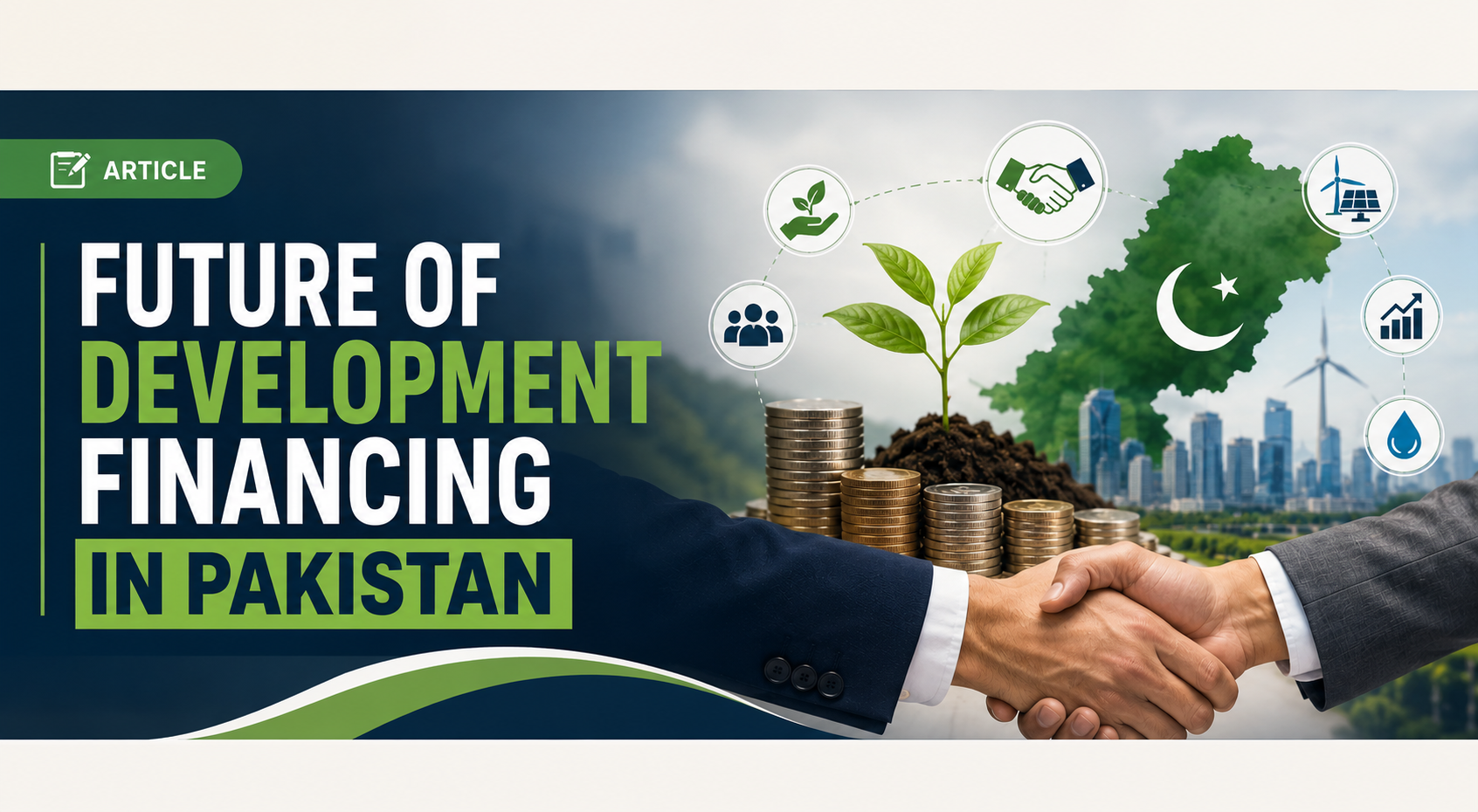
The future of development financing will be defined by partnerships rather than dependency, investment rather than isolated projects, and resilience rather than short-term assistance.
For policymakers, this means creating enabling regulations, strengthening public financial management, promoting public-private partnerships, and improving access to climate and innovative finance.
For civil society organizations, it means investing in governance, innovation, technology, and diversified financing strategies that can sustain impact beyond individual grant cycles.
Ultimately, Pakistan’s development success will depend not only on the volume of external assistance it receives but on its ability to mobilize domestic resources, attract innovative investment, strengthen local institutions, and build effective partnerships across government, civil society, academia, philanthropy, and the private sector. The transformation of global development finance should therefore be viewed not as the end of an era, but as the beginning of a more resilient, diversified, and locally driven model of development.
The writer is a development professional and works for the Peace and Education Foundation.