…..
WaterAid Pakistan’s innovative groundwater recharge project offers a practical model for climate resilience across Pakistan.
Every monsoon, millions of litres of rainwater flow through Islamabad’s streets, often overwhelming drains, causing urban flooding, and eventually disappearing downstream. At the same time, the city’s groundwater—the primary source of drinking water for thousands of households—continues to decline due to excessive extraction and rapid urbanization.
What if that rainwater could be captured instead of wasted?
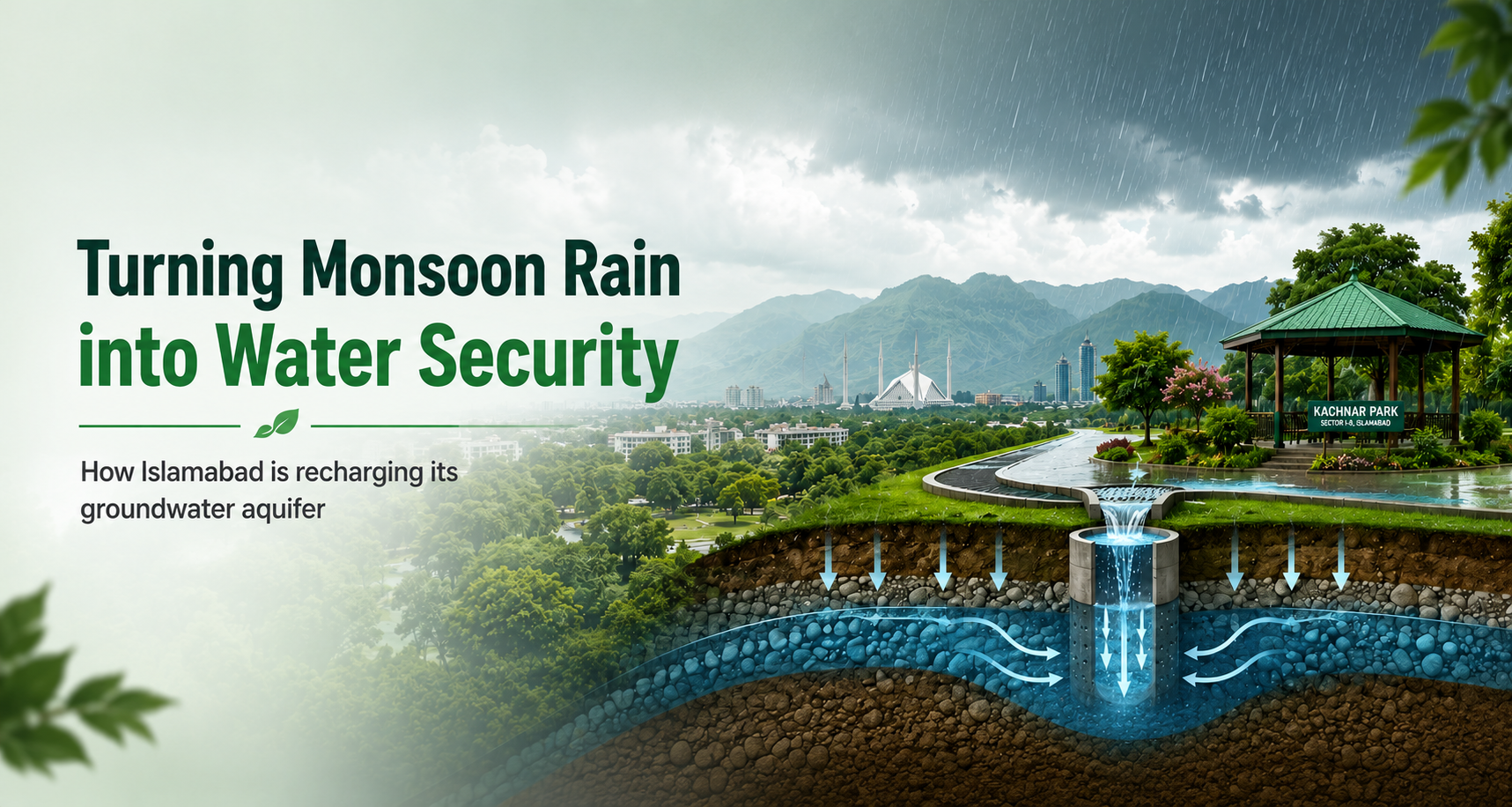
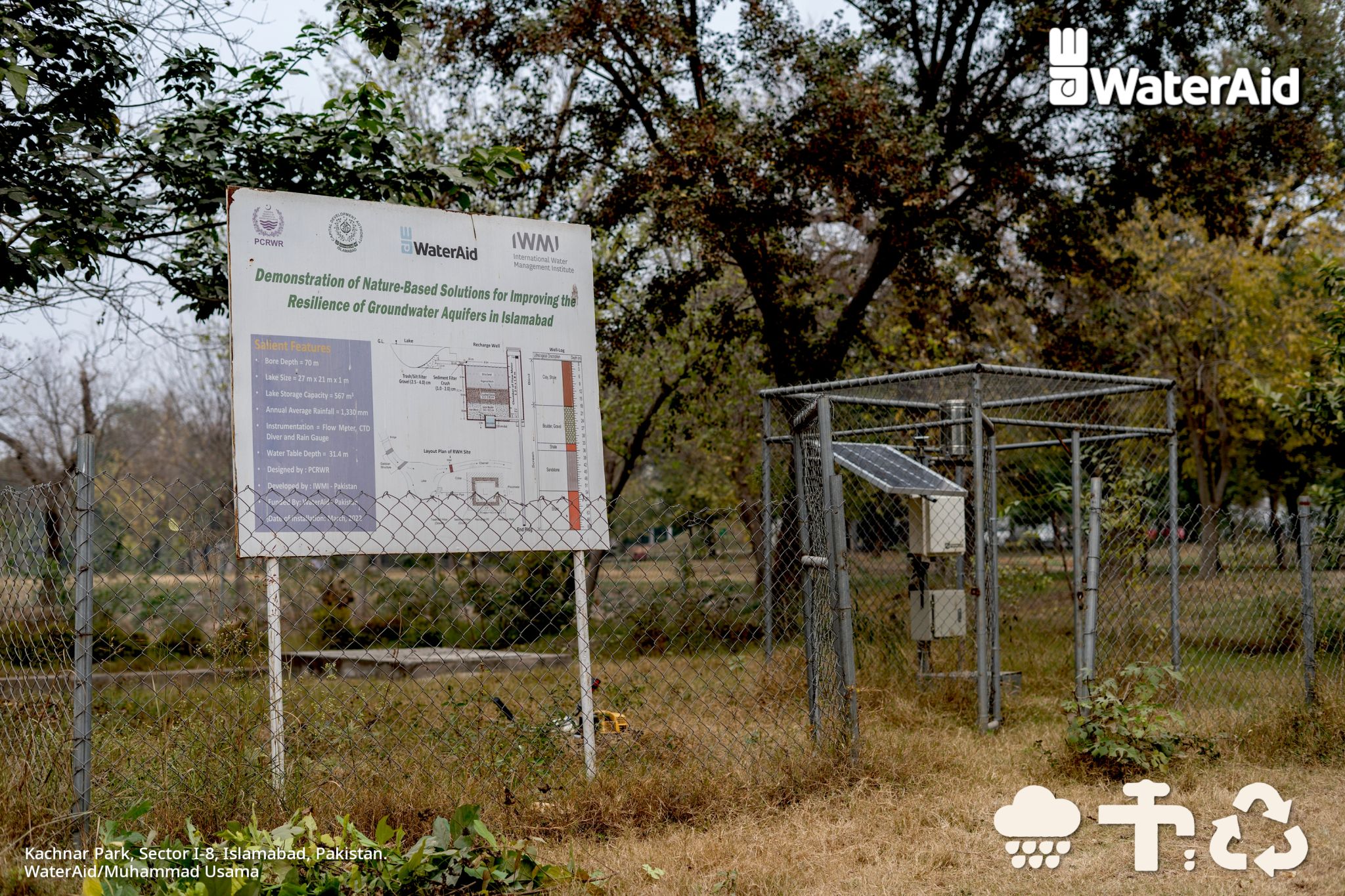
That is exactly what WaterAid Pakistan, in collaboration with the Pakistan Council of Research in Water Resources (PCRWR) and the International Water Management Institute (IWMI), has been demonstrating through an innovative groundwater recharge project at Kachnar Park in Sector I-8, Islamabad.
Nearly 40 Million Gallons Returned to the Aquifer
Since 2022, the project has successfully diverted nearly 40 million gallons of monsoon rainwater back into Islamabad’s underground aquifer through a specially designed rainwater harvesting and groundwater recharge system.
Instead of becoming surface runoff or contributing to flash floods, rainwater is collected, naturally filtered, and channelled into underground recharge wells, where it replenishes depleted groundwater reserves. According to project partners, the initiative has also helped raise the local groundwater table by several metres while reducing pressure on the city’s drainage system.
Why Does This Matter?
Islamabad has witnessed a significant decline in groundwater levels over the past decade. Rapid population growth, expanding urban infrastructure, increasing groundwater extraction, and the loss of natural recharge areas have all contributed to the problem.
Climate change is making matters even more challenging. Pakistan is experiencing more intense rainfall events, meaning cities often face two problems simultaneously:
- Urban flooding during heavy rains.
- Water shortages during the rest of the year.
Groundwater recharge addresses both challenges at the same time by capturing excess rainwater before it is lost.
A Nature-Based Solution That Works
The Kachnar Park project is an excellent example of a Nature-Based Solution (NbS)—using natural processes to solve environmental and infrastructure challenges.
The pilot site includes a scientific monitoring system, including a piezometer, which continuously measures groundwater levels, water table fluctuations, and recharge volumes. This provides valuable data to assess the long-term effectiveness of the intervention and guide future planning.
From Pilot Project to City-Wide Adoption
Perhaps the strongest endorsement of the project’s success is that the Capital Development Authority (CDA) has adopted the model for wider implementation.
Following encouraging results from the pilot, the CDA has constructed more than 100 groundwater recharge wells across Islamabad and has formally taken over the Kachnar Park site for long-term operation, maintenance, and future replication.
This demonstrates how pilot projects, when backed by strong evidence and partnerships, can influence public policy and lead to large-scale adoption.
A Model Worth Replicating Across Pakistan
Many Pakistani cities—including Lahore, Rawalpindi, Peshawar, Karachi, Quetta, and Faisalabad—face similar challenges of declining groundwater levels and increasing urban flooding.
Rainwater harvesting and managed aquifer recharge are not new concepts globally, but practical examples from Pakistan have been relatively limited. The Kachnar Park initiative provides an encouraging local example that can be replicated in parks, schools, public buildings, housing societies, and commercial developments.
As Pakistan continues to invest in climate adaptation and resilience, such relatively low-cost interventions could become an important component of urban water management.
Partnerships that Deliver Results
The project also highlights the importance of collaboration between civil society, research institutions, and government agencies.
The initiative brought together:
- WaterAid Pakistan
- Pakistan Council of Research in Water Resources (PCRWR)
- International Water Management Institute (IWMI)
- Capital Development Authority (CDA)
Such partnerships demonstrate how technical expertise, scientific research, and public sector implementation can combine to create sustainable solutions for complex environmental challenges.
Looking Ahead
Water security is becoming one of Pakistan’s defining development challenges. While large dams and major infrastructure projects often dominate public debate, smaller, decentralised interventions like groundwater recharge can also make a meaningful difference.
The success of the Kachnar Park project shows that monsoon rainfall does not have to be viewed solely as a flooding hazard. With the right planning and investment, it can become a valuable resource that strengthens groundwater reserves, reduces flood risks, and improves climate resilience.
For development practitioners, NGOs, urban planners, and policymakers, the project offers an important reminder that sustainable solutions often begin with making better use of the natural resources we already have.