“A timely report that highlights the often-overlooked issue of child road safety in Karachi and calls for stronger policy, infrastructure, and governance responses.”
Every day, thousands of children in Karachi travel to school, walk through busy streets, ride motorcycles with family members, or play in neighborhoods surrounded by heavy traffic. For many, these routine activities carry significant risks.
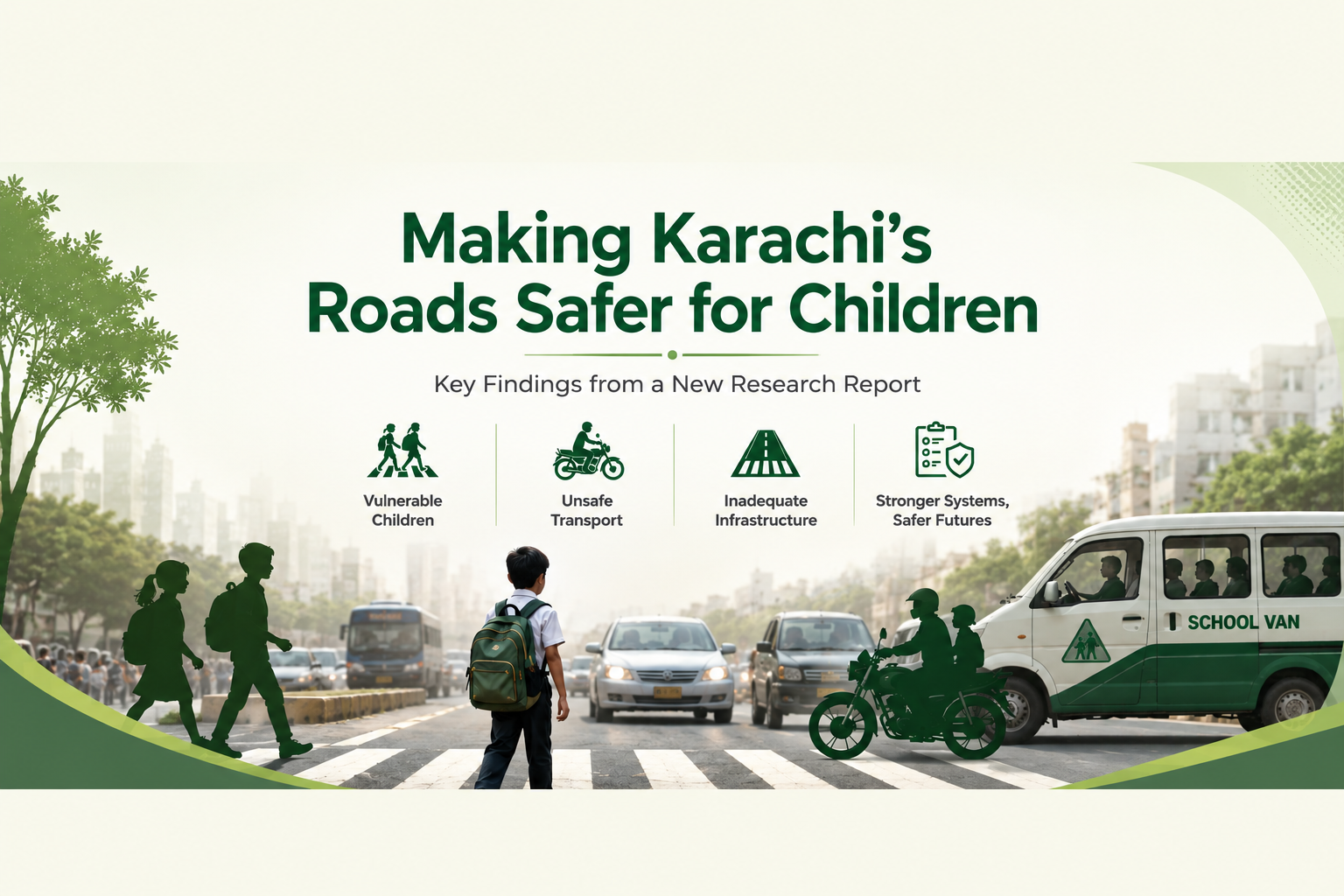
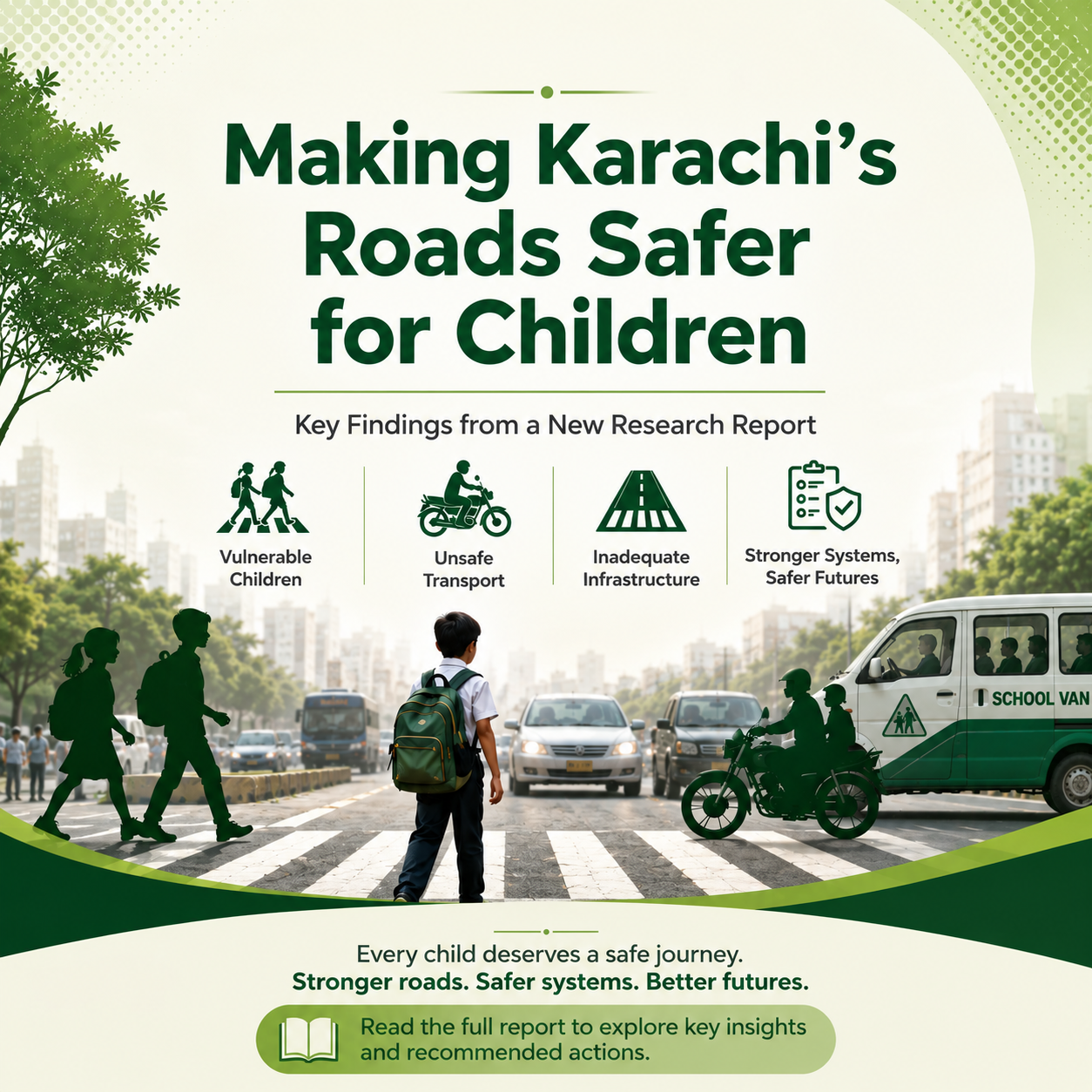
A new research report on child road traffic accidents in Karachi highlights a troubling reality: children are among the most vulnerable road users in Pakistan’s largest city, yet their specific safety needs remain largely overlooked in urban planning, transport policies, and road safety interventions.
Why This Research Matters
Road traffic injuries are one of the leading causes of death and disability worldwide. In Pakistan, rapid urbanization, growing traffic congestion, weak enforcement of traffic laws, and inadequate infrastructure have created increasingly dangerous conditions for road users.
The report argues that child road traffic accidents should not be viewed as isolated incidents. Instead, they are symptoms of deeper systemic problems involving road design, transport systems, governance, and public safety.
Advertisements
Who Is Most at Risk?
The study identifies several groups of children who face particularly high risks on Karachi’s roads:
Child pedestrians navigating roads without safe crossings or sidewalks.
Children traveling on motorcycles, often without adequate safety measures.
Children using overcrowded school vans.
Children playing on streets and service roads due to the lack of safe recreational spaces.
According to the report, motorcycle-related accidents emerge as one of the leading contributors to child injuries and fatalities.
Key Factors Behind Child Road Traffic Accidents
The research highlights a combination of behavioral, infrastructural, and institutional factors that increase children’s exposure to road traffic risks.
Some of the most significant factors include:
Unsafe Driving Practices
Speeding, reckless overtaking, traffic rule violations, and dangerous driving by heavy vehicles such as dumpers, trailers, and water tankers frequently contribute to accidents involving children.
Overcrowded School Transport
Many school vans operate beyond their seating capacity, with limited oversight or safety standards. In some cases, children are dropped at locations that require them to cross busy roads without supervision.
Poor Infrastructure
The absence of sidewalks, safe crossings, school zones, traffic-calming measures, and pedestrian-friendly road design significantly increases risks for young road users.
Socioeconomic Challenges
Children from lower-income communities often rely on motorcycles and other unsafe transport options. Many also play on streets because safe recreational facilities are unavailable.
The Problem Is Bigger Than Individual Behavior
One of the report’s most important findings is that child road traffic injuries cannot be solved through awareness campaigns alone.
While public education remains important, the study concludes that the problem is deeply rooted in:
Weak urban planning
Fragmented transport governance
Poor enforcement of traffic regulations
Inadequate emergency response systems
Lack of reliable child-specific road safety data
The report emphasizes that children are being placed at risk by systems that were not designed with their safety in mind.
What Needs to Change?
The study recommends a range of reforms, including:
Stronger enforcement of traffic laws.
Improved regulation and monitoring of school transport.
Development of safe school zones.
Construction of sidewalks, pedestrian crossings, and traffic-calming infrastructure.
Better coordination among police, hospitals, rescue services, and transport authorities.
Creation of integrated child road safety data systems.
Community awareness initiatives targeting parents, drivers, and children.
The report also highlights the potential role of development partners, donors, civil society organizations, and UN agencies in supporting research, advocacy, and capacity-building efforts related to child road safety.
A Child Protection Issue, Not Just a Traffic Issue
Perhaps the most powerful message emerging from the research is that child road safety should be viewed as both a public health concern and a child protection issue.
Preventable road traffic injuries continue to affect thousands of children across Pakistan. Addressing the problem will require coordinated action from government agencies, schools, communities, transport operators, civil society organizations, and development partners.
Read the Full Report
This article highlights only some of the key findings and recommendations. The complete report provides a more detailed analysis of risk factors, systemic gaps, and potential policy responses.